Sunday, October 7, 2012

Weeding and a single caterpillar

Caterpillar

This week I started weeding some of nettles the thistles and rag wart that been growing in the orchard. I have started with the weeds that are around the trees themselves and it’s been tough. I plan on burning them then next week. I will have to pull out more weeds then build a small bonfire and burn them. I may have to continue the progress for a couple of weeks, and build a small fire each week, the plan is to build small fires in places where in the next couple of years  I plan to plant trees, then cover the area with bovine manure. I may even plant some wild flower seeds so as to encourage them to grow, and spread before next round of planting.  

The orchard is full of weeds or plants that are traditionally thought of as weeds and I know that some of them provide a good food source for my bees   and encouraging a varied wildlife, it does half look messy, mind.  I need to cut paths in and around the trees again. This will probably have to wait until the beginning of spring next year. I need to get some of the equipment sharpened and ready for the amount of work that it will have to do.

I have also started to look at what creatures are in and around the orchard. I found a strange looking caterpillar, which was surprising as it’s getting darker and cooler, and I personally don’t associate October with caterpillars and butterflies. We are clearly into autumn and they seem to be thriving. Last week I found a frog and this week a caterpillar it’s good that the creatures are thriving in the orchard.

I still see loads of rabbits and hares in the orchard, which is good, and nice to see them when I arrive and then they dart off and disappear. I haven’t seen any pheasants in the orchard this year but have in previous years.

Horses may have been into the orchard again, recently as again they have left me lots of manure. I didn't see Chris but will have to talk to him. I would be more than disappointed if they were to damage any of the trees.
I don’t know the exact names of the creatures that I have come across but I am now aware of a website that I can upload pictures too and then people can try and identify them. Will have to do some research into this and start using it.

I plan to collect acorns and conkers if I see them and place them into the freezer and see if I can plant them in the orchard, just to increase the different types of trees and encourage more wildlife into the orchard. I may even plan another withy ring around when the bee hives are. It would be nice and a good food source 
for them in the early months of bee keeping season.

So many ideas and plans and they all seem so simple but getting the work done isn’t as easy. 

Tuesday, October 2, 2012

Mead Production


Notes made at the lecture given by Peter Spencer at the Sutton Coldfield BeeKeepers lecture evening 20th September 2012

Mead is the original alcoholic drink and is mention in Hindu text dated from roughly 1500bc. Mead occurs naturally in some hives as its honey that has a high level of water and natural yeast has started the fermentation process. It was thought that mead was a gift from the goods and was offered back to the gods.

Most famously mead was drunk by Vikings, probably as part of wedding feasts.

The primary ingredients of mead are : - Honey, water and Yeast.

Today the essential additional ingredients are : Yeast, Acid, Tannin and Vitamins quantaties and ratios of water to honey 10 liters of water with 2.5kg of honey less honey produces a less alcoholic drink

The acid can be provided from the juice of lemon and the vitamins are to feed the yeast. The difference yeasts can be combined and can alter the quality of the mead. The yeast actually consumes the honey. The Tannin is for astringency. Which is the puckering sensation you get when you eat or drink something with a sharp taste. You can add fruit rather than adding tannins directly. Yeast can occur naturally but you don't know if a naturally occurring yeast will have a positive effect on the mead.

The yeast is a culture that can survive in the mixture and actually consumes the honey and the vitamins and will leave a sediment at the bottom of the bottle.

The method heat the honey and the water to about 66 degrees and allow to cool until about 21 degrees then add the yeast and other ingredients.
 Peter commented that he adds 1 tea spoon at sugar and 1 teaspoon of marmite at this point.

 The initial fermentation is very rapid and does not require a  bung or air lock. Instead place a muslin cloth over the mixture so that nothing can fall in and gas produced during this initial fermentation process is allowed to escape.

 Peter also suggested trying different types of honey and stated that heather honey is his favourite, but takes longer and could take upto 5 years for the mead to mature and be drinkable.

 You can after a week siphon off the contents into another container and discard any sediment that has built up at the bottom. Peter also suggested that placing the mixture into a demijohn would make handling and storing the mead much easer. You should now apply the bung/airlock and its important keep the bung wet. You can also top up the mixture with additional water, peter recommended boiling the water first allowing it to cool down and then add to the mixture. This is then stored for a further 5 to 6 weeks. Then the siphoning off so the top layer is removed again, and then discarding the sediment at the bottom.

 Then leave in a cool place for a year. The mead at this point should be bright and clear, it can be bottled and after a few more months its ready to be drunk.

 A sweet mead is best kept for 4/5 years. So its important to keep records of what you have done and when the next process is required. Things like when each process is started and when last siphoned types of honey and yeasts used and any other ingredients should be recorded.

The alcohol levels of mead are much higher than some other alcohol drinks, and are normally around the 12/14% area.

The water that is used does make a difference and  if water is from a hard water or soft water area it makes a big difference and suggested using water from a soft water area.

Since the lecture I have looked at various web sites and it appears people have very different approaches. They all produce mead and its more a question of personal taste. The main ingredients are water yeast and honey.

Saturday, September 29, 2012

Frogs, Lichen and bees with loads of pollen


The trees are fine, some have started to change colour and the leaves are beginning to wilt. The leaves themselves on some varieties of cherry trees have started to turn a nice orange/red.

The grass is way too long and hasn’t been cut and the hay not been collected. I reckon that the farmer is going to let me down and not get it done.  On the positive mind the grass will rot down and become a green fertiliser and as most of the tall stuff still has seeds it may be a promising year, next year.   With so much grass rotting down it maybe that in some places the ground will be rather muddy, next year if we have loads of rain. When that amount of grass falls down it blocks the light and everything beneath it dies down. I am hoping that some of the clover will great through and flourish.
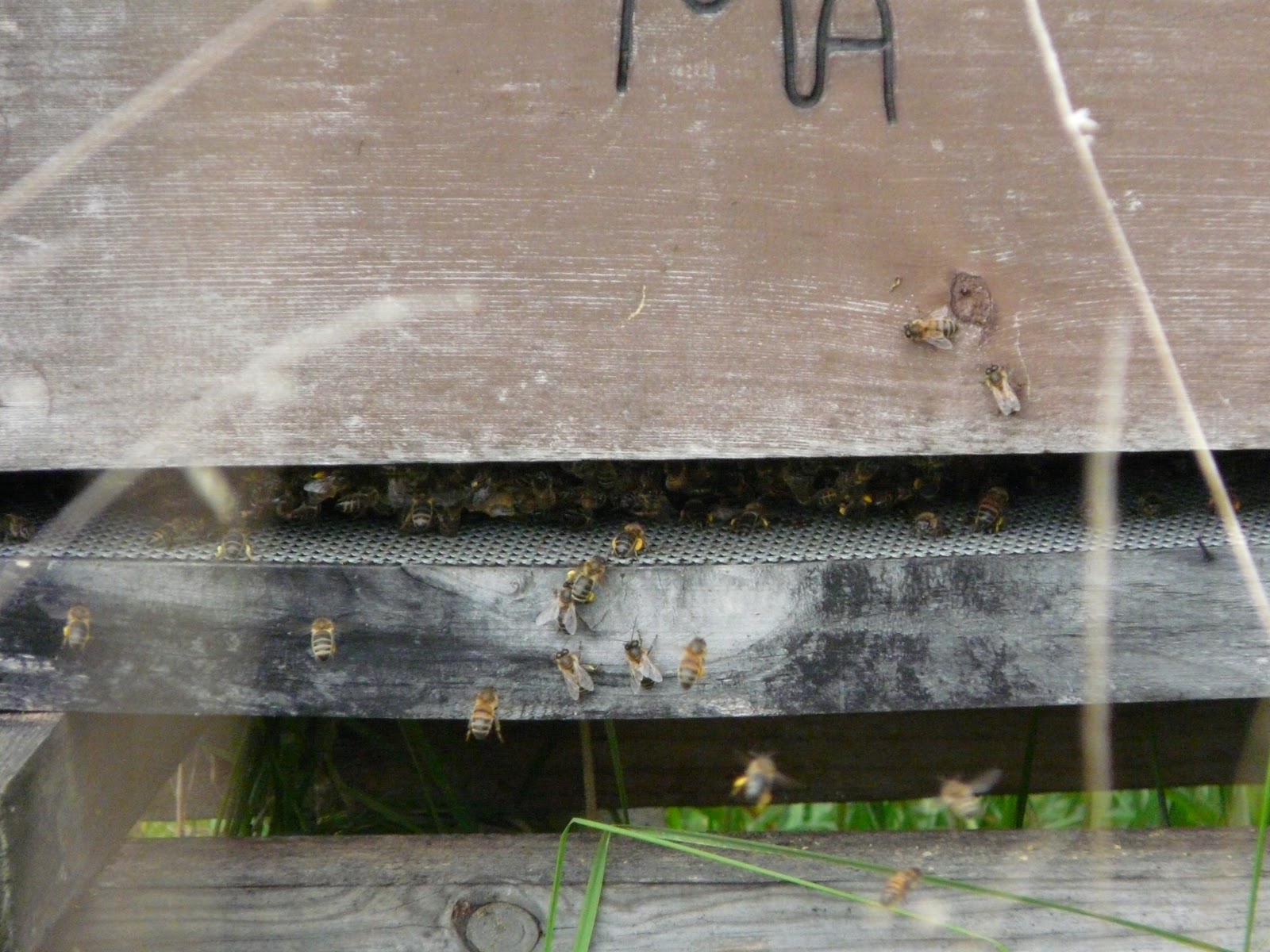
The bees are doing well they seem to have found a decent pollen source and are bringing in loads of the stuff. The pollen is a nice bright yellow. I didn't actually go into the hives, so I'm not sure how much of the sugar fondant they have taken down. My guess with the amount of pollen they are bring in the queens are still laying and are still filling the comb with honey for the winter period.
 
I had a slow wonder around the orchard and a mooch to see what’s happening and examine the seasonal changes. I found some pears still in the trees and a rather handsome frog with a circular ring or crown  on his back in the area that’s rather damp. The willow ring is doing really well on all the pollarded willow I planted earlier this year.  I have more that a meter’s growth and the branches can be stretched out so that they touch one another. I should have a reasonable withy ring next year but will probably plant more.
I also looked at different types of lichen on the trees. The lichen is thriving. I’m not sure what types of Lichen I have in and around the orchard but as some is yellow in colour It means that the soil is high in nitrogen. I can also see lots or more pale lichen, which is again a good sign. I really like the pictures of the lichen.

Tuesday, September 25, 2012

Bees get last dose of Api Life Var for 2012


The weather on Sunday was not pleasant, it also looks like its going to be wet and windy for the next couple of days.

I applied the last dose of Api Life Var which I did successfully, even though it was raining. I had no choice really the treatment must be applied every seven days and this was the last dose.The reason for the regularity is, if you can hit the varroa mites every week for 4 weeks you are attacking the varroa for the entire justation period of a bee; from when the egg is laid to when it emerges from it cell. If the varroa mite can be reduced for this period then the new bees that emerge have time to develop and should be stronger to fight of the any varroa that are still in the hive.

Bees are never happy when you enter the hive when its raining. I entered all three hives and to my surprise the bees wern't that aggressive, even though it was raining lightly. The fondant that I gave them last week has been greatly reduced, I would guess that about 3 kgs of the fondant has been eaten. I may need to get more fondant this year.

The orchard is pretty quite the leaves are begining to to fall and I reckon that in a couple of weeks all the leaves will have fallen from the trees. I have also seen large amounts of horse poo in the orchard. It looks like the horses from the stables have been getting into the ochard. They seem to keep themselves to the far end. It's worrying, but they seem to have kept to the grass and not touched any of the trees. I need to talk to the stables owners and find out whats been going on. In reality I don't mind the horses eating the grass, it will bring it down, as it has grown out of control. However they should not touch the trees. I would hate to lose any growth on the trees.

I also worry about the horse poo, I would prefer bovine manure in the orchard and at this point I do not want to build fencing around the trees. Perhaps in a couple of years I will get sheep and they will keep the grass down.

Tuesday, September 18, 2012

Started feeding the bees and lesson learnt.


Fondant block placed into the hive
So over the weekend I removed all the supers and the queen excluders. I have applied the next dose of the varroa treatment and place a 12.5 Kg block of fondant on each hive. I have enough to apply two does on each hive and if  I need more then I will start feeding syrup.
Fondant block in less than a minute
I was down at the orchard on Saturday and checked on the bees I can see capped brood and eggs in all the hives. The weather has been generally warm but the mornings and nights are getting colder. The last dose of varroa treatment will be applied this coming weekend.

When I put the fondant into the hives, which was a straight forward task i noted that within minutes I could see that the bees had started clustering around it and had immediately started to consume it, and bring it down..

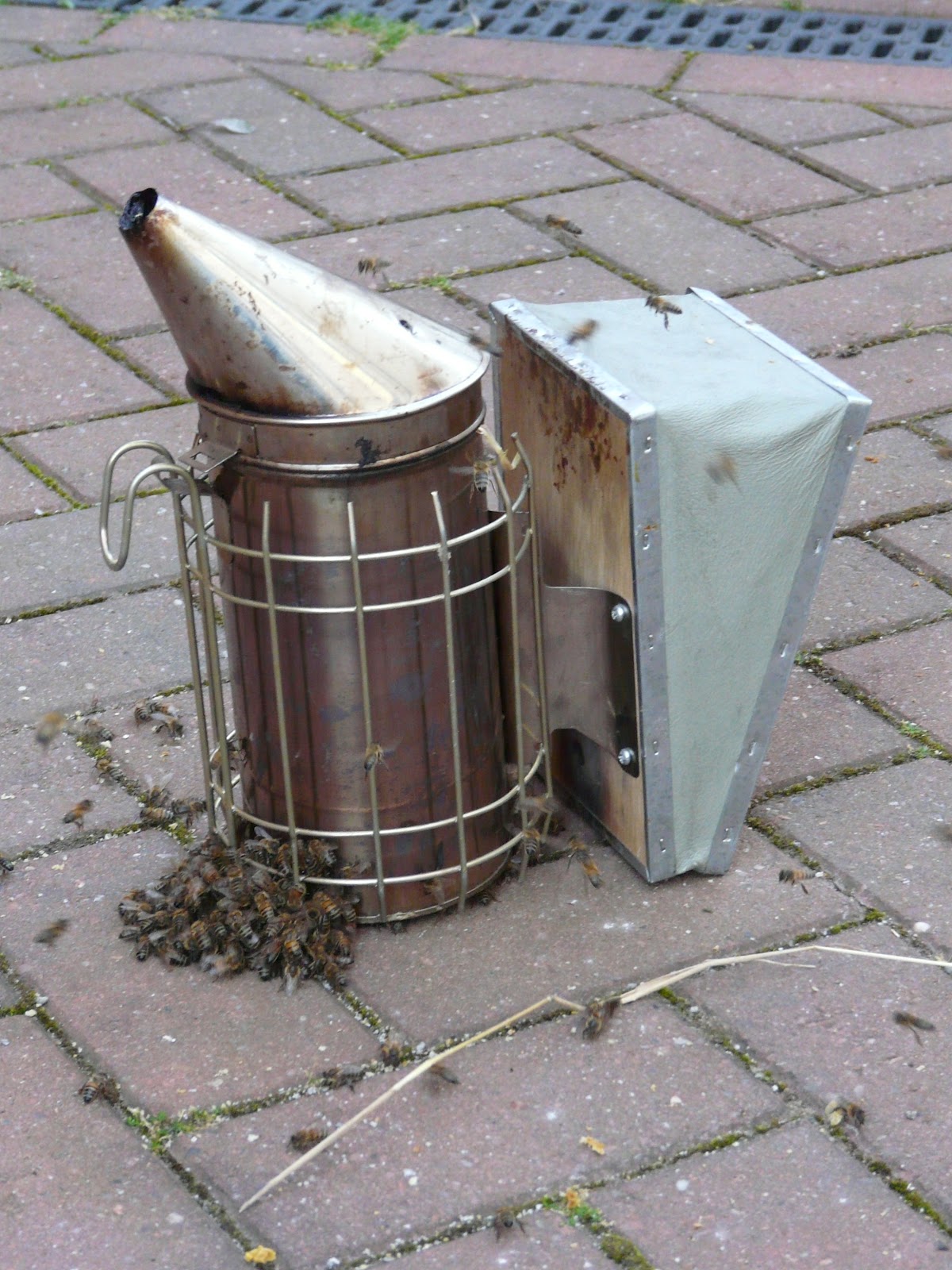
The suppers that I removed did have some honey in them but not large amounts so its probably the right time to start feeding the bees. So I took the supers home and the plan was to place them in the garage.This is when I learnt a lesson. I place the empty equipment next to the garage door and opened the garage door and I was distracted by friends coming to visit. I didn't return to the garage for about 45 minutes. When I got to the garage what should I find to my horror, all the suppers were covered in thousands of bees, some had even gone into the garage where I keep my spare suppers, and extra hive and my nuc box and the fondant, it was like a large swarm had descended onto the equipment.
My smoker, which many bees found interesting
I closed the door to the garage, which meant inside the garage its reasonable dark and we have a side door which lets in light. The bees had gathered around the window and when I open the door the majority went out. I did the same again about minutes later and all the remaining bees came out.

I started then to deal with the suppers I had to literally remove each frame from the supers one at time brush off the bees and then take the frame away. Then the actual super itself. It took a while but was a learning experience. The bees, I'm not sure who's bees they could have been were very docile and a pleasure to handle. When I managed to remove the suppers I fund that the small quantities of honey that were still in the frames had all been removed and the supers were completely dry. The bees had even uncapped and removed some of the crystallised honey that was remaining in a couple of the frames.

The bees remained for am hour or so or more, I didn't received a single sting in fact, I sow the bees fighting each other for the honey and found a number of dead bees on the floor. The bees were even trying to remove any extra wax that they found lying on the floor from capping etc.

I learnt a lesson this week, don't leave equipment out and about, after use, it far to dangerous. Its a good thing my neighbours didn't the masses of bees that had gathered on the suppers, they may have truly had a shock.

I didn't managed to get around all the trees this weekend. I was hoping to but its was a busy weekend.

Tuesday, September 11, 2012

Sutton Honey Show

Some of the Exhibits at the Sutton Coldfield Honey show

 I had never entered a honey show however all that changed this week. I went and deposited at first two jars of granulated honey. I then realised that I could enter a couple more categories so I rushed home and grabbed another jar and entered another category. I have entered the novice class  and the granulated honey categories. The honey show was held at the Belfry golf course a very nice location for the show. Not sure how many members of the public attended, but it wasn't that published from what I saw.


Next year I may enter a picture for the best photo entry and perhaps a couple of candles for a candle class and hopefully a couple of jars of honey depending on the harvest next year. The pictures show my honey with those that they are completing with.

I also applied the next dose of varroa treatment at the hives in the orchard. This means that all the hives at the orchard have been treated for varroa this year. From later this week I will start feeding the bees to get them though the winter even though they are still bringing in nectar and pollen. The plan is to put the mouse guards in place in a couple of weeks. I have seen lots of capped brood in the hive but no eggs.

Bees clearing the wax of honey
I took some of the excess honey comb out of the hive this week and as you can see from the pictures a couple of bees followed me or perhaps they followed the scent of the wax and the honey and then cleaned out some of the comb. This weekend the weather was lovely, it was hot and it felt as if it were the middle of summer not the start of autumn. The bees were lovely to handle not a single sting and when I was taking the picture I had removed my gloves and face mask. The bees were very friendly to handle, and a pleasure. This year what with the bad weather, and poor conditions they have been a lot grumpier.

I have a cherry tree that was damaged earlier in the season so I trimmed it back and I can see new growth on the tree. Which I am very pleased with, at least I have not lost the tree, I may have lost a couple of years of growth but not the tree.
New Growth on a damaged cherry tree
The grass is yet to be cut and I can see other farmers still bailing straw etc, So I am hoping that mine will be done soon. I also found horse manure in the orchard, looks like one or more of the horses from next doors stables has managed to get in and have a wonder. I didn't see any damage to the trees though. Also some of the cherry trees leaves have started  to loosen and the leaves will probably fall off in a couple of weeks, and the leaves are beginning to change colour so autumn is fast approaching.

Monday, September 3, 2012

Conkers and more candles

Last week I said how I had enjoyed making candles, well this week I found my other silicone moulds and I started to make more. I have two other moulds one of a teddy bear sitting on a hive and the other is a bear next to a bee hive. They are nice and cute, my kids really like them and I hope others do to.

I may actually sell some perhaps nearer to Christmas and some of the others will be given away as Christmas presents. So I made six more candles this week.
More candles made my me
As the picture shows they are nice. I am not sure how many I'll be able to make. I can make more of the smaller ones obviously so I will probably will make more of them, they contain less wax. The larger ones that I made last week contain about 100grams of wax, that's a lot of wax. I gave one to my mum and she is going to test and give me feedback perhaps this week.

I have started the varroa treatment at the orchard and the three hives have all received the first does of treatment of ApiLifeVar. The other doses will be applied over the next couple of weeks.
Chicken in the woods mushroom
Over the past I have found a fungi on one of trees its a chicken in the woods mushroom that can been eaten, it about 10 feet of the ground so its pretty high up and in truth I won't be collecting it. In past I have eaten one a couple of years ago now, while in Belgium. From what I remember its tastes nice, I had it in am omelette and the one on the tree is big enough to make several omelets.
Apples in the orchard
I have found more pears on the trees and I may be making the same mistake again by letting them ripen and will pick them next week. They are still small lets hope them ripen and are ready for picking next week.

Lots of spiders about I took a couple of pictures. Some of them are pretty big. My hand was tangled in a web over the weekend and I had the contents of the web all stuck all over my hand. Hence the interest.

I picked a couple of apples which I took home, havn't tried them let.
Me having at rest at Conkers
I visited conkers this week. Conkers was a coal mine that has been converted into a nature reserve people pay to visit it, or become members. Its very modern and well worth a visit, They have re landscaped it and put various attractions and things for people to do. like interactive exhibits I liked and assault course,my son liked the small train that gets you from one site to another it a quick ride. Lots of indoor activities for wet days in the various education buildings. They also have outdoor interactive exhibits like getting water to run down various channels and getting fountains to work. The kids enjoyed wondering around the labyrinth. They also have various hides and rest areas, which are nice. Nothing that stands that I haven't seen before but they have brought them all onto one location. Its a place that adults and children can have fun. Well worth a visit if your in the midlands check it out. http://www.visitconkers.com/