Get out side and have a look around this is one of my favourite times of the year.Things are changing so quickly, its a time of year when things are closing and getting ready for the following season. Nature is discarding this years clothes and fashions and getting ready for the following year. The buds have started to form on the trees, Seeds have fallen and are sinking down and getting ready to leap out at you next year. The trees have pushed all its sugars deep down into its roots, and are awaiting the suns warm rays to rush up and push out new branches extend old ones and force up all that energy. Go out and check it out.
Just wrap up warm.
This was the last paragraph from the last entry. Im sure not everyone reads to to the bottom so I created a separate entry.
Friday, November 9, 2012


Sunday, November 4, 2012
Its Cold Quiet and the ground is wet
 |
| Its was cold and bitter |
 |
| Quince tree with yeallow leaves |
The leaves are yellows, reds and browns and still green on the almond trees and its very quiet, and cold. The cold last week was very sharp.The wind was also piercing.
 |
| Almond tree still with green leaves |
 |
| Red veins on a quince leaf |
It was far too cold to visit the bees but I hope they are doing well.
As I write this I am on a train from London to Birmingham, and I can see that they many fields, woods, and bits of land that I pass are water logged. I have even seen several hundred willow trees planted. I presume they are being grown for energy, as a biomass as they are planned very closely together. The colours along the journey are great and the journey very picturesque.
People get out side and have a look around this is one of my favourite times of the year.Things are changing so quickly, its a time of year when things are closing and getting ready for the following season. Nature is discarding this years clothes and fashions and getting ready for the following year. The buds have started to form on the trees, Seeds have fallen and are sinking down and getting ready to leap out at you next year. The trees have pushed all its sugars deep down into its roots, and are awaiting the suns warm rays to rush up and push out new branches extend old ones and force up all that energy. Go out and check it out.
Monday, October 29, 2012
Scotland and back home

I've been away with the kids for the half term holidays.
We went to Scotland where we managed to see a couple of
fruit trees, many apples trees still had fruit. This was my first time to
Scotland and I was hoping to see the autumnal changes and the falling of leaves
and the changing of colours. I wasn't disappointed. It was like being bombarded
with colours.
The further north you get the fewer trees you see and the
ones that you do seem to be small and more compact and doing well in their own peculiar
way.
Near John O Groats I saw some trees that were growing at a
45 degree angle, presumable because of the weather the wind and rain forcing
them to grow at strange angles.
Back at home in my orchard. Things are also changing very
few trees still have green leaves. Lots of the
trees have lost most of their leafs and the rest of the leaves have turned yellow or red and are
getting ready to fall off.

Some of the quinces have very pretty red veins on bright
yellow leafs.

I can also see the occasional meadow buttercup and I have
included a picture of what Ispot called a meadow butter cup but does look like
any others on google images. I may have to do a little more research on it.

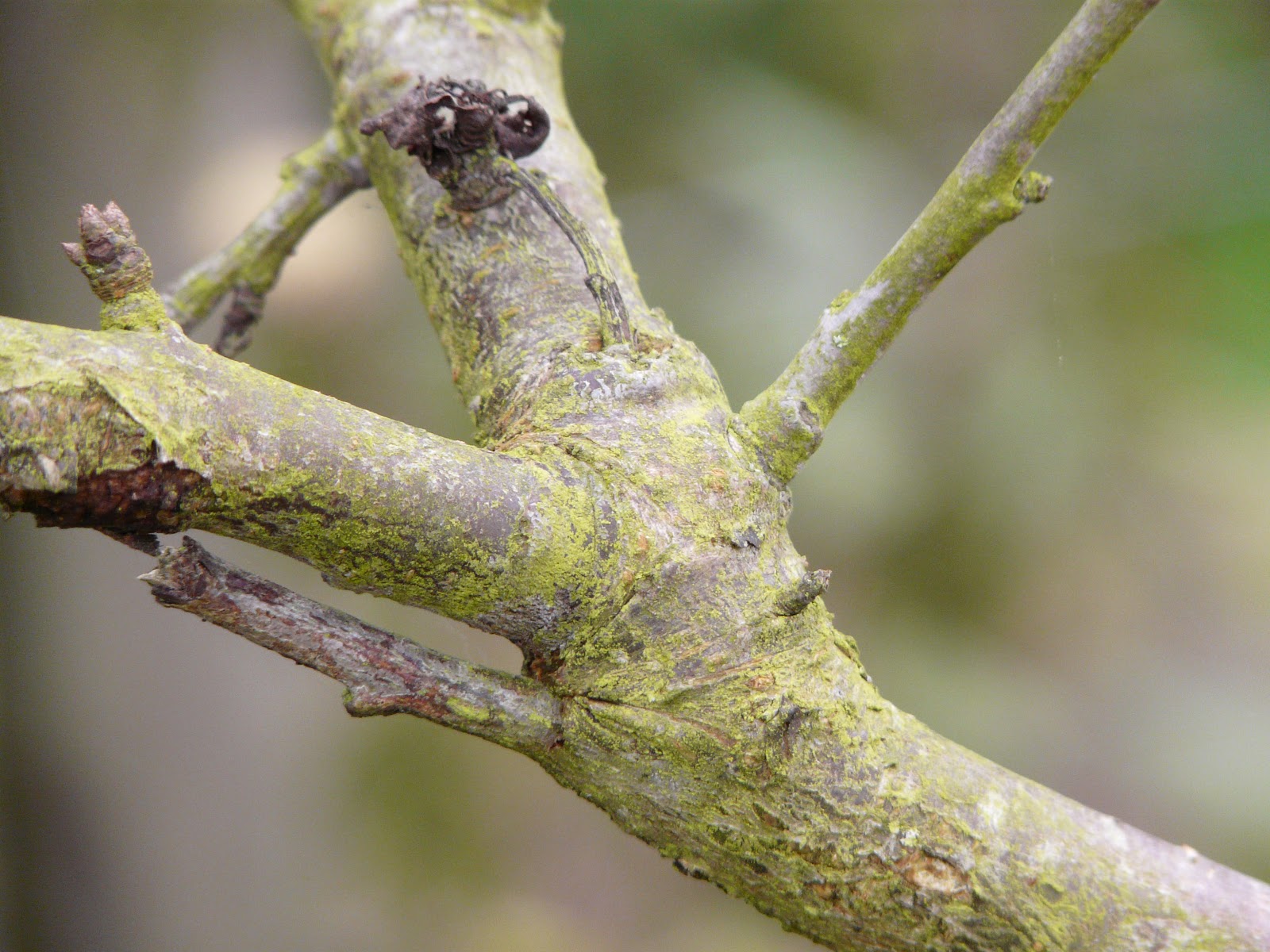
The trees I have noted have a considerable amount of moss
growing on them and the ground continues to be very dam and moist. The grass is
dying back and it seems in some places that the ground is actually 2 inches
further down that you think. This is because the grass is so long and has
fallen down giving the impression that the ground slightly higher than it is.
I have given additional food to the bees and each hive got 6
kilos of sugar fondant, winter is kicking in. I may have to order more in.
Friday, October 19, 2012
Bee Stings
18th October 2012 lecture given by John P Gower
John is a surgeon who became interested in bees and bee stings after a patient had an extreme allergic reaction to a sting.
People have around 40,000 stings a year. From his experience most are from wasps. Around 20 people have anaphylactic reactions. Anaesthetic drugs kill about 10 people a year, nuts kill about 5 people a year and insect stings from wasps and bees kill about 4 people a year. Roughly 40 bee keepers a year are taken to hospital.
Why do bee and wasps sting.
Bees and wasps sting normally to protect nests and colonies. Lots of reasons can trigger or increase the likely hood of stings; this includes things like the weather, the season, the state of a colony, if a hive or nest is queen less, or brood less.
Guard bees are alerted as an animal approaches too closely to a hive or makes nervous or erratic movements. If hives are rocked or vibrated or a direct threat to an individual bee is identified it heightens the chances of a sting. Strong odours, pheromones, dark colours and carbon dioxide from mammals also increase the chances of a sting.
Guard bees intent on stinging, rear up with wings spread and mandibles' open.
Alerted bees may leave nest searching for a predator.
At first bees start buzzing and irritating-annoying the predator. Bees may continue and finally head butt the predator to ward them away. Bee's will also burrow into hair and may pull or bite hair again to annoy and irritate the predator away. The bee or the wasp is going for rapid movement and is searching for the face and the breath and sweat will attract the bees.
Bee attempts to sting
Where clothes are more constricted the bee sting has a better chance of impaling you. Venom that has dried on clothes will attract other bees. It's important to keep the bee suit clean.
The sting is a modified ovipositor. Only the queen and the male bees do not have them. The sting is normally in a retracted state. It is enclosed in the 7th abdominal segment controlled by nerves.
One the sting has been deployed its takes for upto a minute or longer to inject all the venom. The venom is stored in a venom sac grown from day 3 - day 21 in the brood. The older a bee the less venomous they are.
An umbrella action sucks and pushes and pumps the venom. The bee sting pushes in deeper by pumping its muscles.
Venom is a clear liquid which tastes bitter and smells of ripe bananas 88% of it is made up of water. It also contains enzymes and phospholipids, Hyaluronidase and acid phosphates its these that are responsible for the allergic response.
Venom contains mellitin about 52% of it is mellitin. It encourages the production of cortisol in the body as does Apamin and another core ingredient. The rest is a mixture of Adolapin, Phospholipids and Hyaluronidase and Histamine, which causes the allergic response.
The first sting is the main allergic contributor. It produces a local reaction,
- fiery intense pain
- immediate redness
- small pale raised area about 1 cm in diameter
Second and sub sequential stings.
- Central sting subsides but surrounding areas swell and increases slowly over several hours
- It may be gross where skin is loose. Primarily the face.
- Such swelling is not dangerous unless it affects the airway
- Itching is caused by histamine released, from the venom.
- There may be blistering and this can get infected if not protected
Treatment of normal reactions
- Relive pain by cooling - via ice pack
- Give simple analgesic aspirin paracetamol
- If swelling after stings becomes a problem take antihistamine and hour before tending the bees eg Priton.
Bee keepers normally become desensitised to bee stings over time some even after having kept bee for a long period may get an allergic reaction.
John suggested a book by Harry Riches - Medical aspects of Beekeeping for further reading.
Tuesday, October 9, 2012
London Honey Show

I attended the second London Honey show yesterday. I also
attend it last year and again it was held at the Lancaster hotel.
This year it was slightly bigger and a bit more organised. I attend all the lectures which was pretty easy they had 3 though at least one of the original speakers let the organisers down and a substitute was needed.The lectures weren't given in the order stated on the agenda but that didn't really matter.

The first speaker was Frank Minns a gardener from London. He isn't a bee keeper and this was evident. He mentioned various plants that he as a gardener had noted bee’s liked. Some of them were rather exotic. He even mentioned more traditional flowers like daises, and types of roses that are suitable for bees but it was clear that he didn't know which plants were good for pollen and which were good for nectar or flowers that are suitable for both, or he didn't mention it.He did note that bees like white and blue flowers and wasn't aware that bees can't see the red, or that part of the visual spectrum.
It was an interesting talk, and I did learn about some rather large plants that would look good in very elegant gardens and smelt of honey. He was also critical of grasses and mentioned that they aren't beneficial for bees. Frank also mentioned various trees and how they provide food for bees, Lime trees especially.
I would have liked some seasonal information, like planting Willows for pollen in the early months and Chestnuts then Lime trees and then ivy for the winter months, some of the audience clearly wanted this type of information. I talked with a couple of people after the lecture and it was a nice chat.

The second talk was on Bee Keeping for Beginners from author James Dearsley writer of "from A to Bee".
This was also interesting and somewhat glossy.
Although as an author of a bee book you get the feeling he was trying to sell a couple of copies of his book. He did mention a couple of mistakes that he has made. It was obvious that he really enjoys bee keeping and like all bee keepers its changed his life and his life perspective. He mentioned how he is more interested in the plants that the bees collect pollen and nectar from. He is also more aware of bees and watches them to see what they are doing and where they are going and collecting from. He mentioned how most bees are lazy and how they have perfected the waggle dance to tell other bees where decent food can be found. If they can collect food from an easy source they will. He highlighted recent stories the French M&M factory where bees were collecting the coloured sugar and the Incident in the US with maraschino cherry juice.
In hindsight I did enjoy his talk more than I thought, as he was an author I kind of felt he would be plugging his book and at the end he did. I haven’t read his book but he stated that it was about the bee keeping mistakes he has made. It's more of a humorous book rather than a theory one.

However off all the lectures I enjoyed the final one the
most it was from Karin Courtman from the London Bee Keepers Association
She mentions how the number of hives in London had gone up,
from 1617 in 2009 to 3337 in2012. This was from people registering their hives on BeeBase.
She also mentioned facts like the amount of honey being produced in London had
gone down per hive and some bee-keepers have to feed bees throughout the year. She
also stated that you don’t need to be a bee-keeper to enjoy bees. She mentioned
what she enjoys about going into a beehive the sounds and the smells. The way
that as a bee-keeper you learn quickly how the bees are feeling. How the smell of
the wax, the propolis and the honey is something you enjoy and the feeling you
get when you’re in the hive. These are some of the things I enjoy also, you never
know what’s going to happen when you enter a hive, or the feeling you get when everything comes together and you have 60,000 bees whizzing around and
your know they aren't going to harm you.
She also mentioned mistake she had made and when she was
stung some of them were dumb things that I have done, but as a fellow bee
keeper they were understandable. She presented it in a way that was simple and
made it sound like she was having fun.Although
she has been taken to hospital because of the number of sting she received
once, while showing a class of new bee-keepers that they shouldn't be afraid of
the bees. All the students had bee suits on and she didn't.
The show had lots of other non bee related stalls and
exhibitors, like Suzanne Morgan an artist from Wimbledon who attempted to sell
some of paintings, and a family selling different types of cakes.
I also liked some of the stalls selling bee products like
Gold and Black a company from Dorset that makes bee’s wax candles. The wax comes
from Yorkshire and I always thought that established bee keepers especially
from the north never gave away the bee’s wax. Bees wax is far more valuable than the honey.
The Thornes representatives were on hand to sell bee keeping
supplies but it was somewhat muted. A couple of stands selling various bee
hives I was impressed with a hive made from recycled materials, not sure the bees
would be. Also no one from the Omlet organisation as this would have been an
ideal market for them, and when I met a chap from Omlet at the spring
convention a couple of years ago he was based in the London Kings Cross area.
A couple of charitable organisations were also exhibiting, this included Garden Organic and lucenarium a social enterprise helping marginalised people. The Open university were on hand promoting ispot a website when you can take a picture something in the wild and people help identify it. I upload the picture of the caterpillar I found on Sunday and its a knot grass Caterpillar.
The honey tasting completion was also nice, lots of honey on
offer and varying colours and textures.
Sunday, October 7, 2012
Weeding and a single caterpillar
 |
| Caterpillar |
This week I started weeding some of nettles the thistles and
rag wart that been growing in the orchard. I have started with the weeds that
are around the trees themselves and it’s been tough. I plan on burning them
then next week. I will have to pull out more weeds then build a small bonfire
and burn them. I may have to continue the progress for a couple of weeks, and
build a small fire each week, the plan is to build small fires in places where
in the next couple of years I plan to
plant trees, then cover the area with bovine manure. I may even plant some wild
flower seeds so as to encourage them to grow, and spread before next round of
planting.
The orchard is full of weeds or plants that are
traditionally thought of as weeds and I know that some of them provide a good food
source for my bees and encouraging a varied wildlife, it does
half look messy, mind. I need to cut
paths in and around the trees again. This will probably have to wait until the
beginning of spring next year. I need to get some of the equipment sharpened
and ready for the amount of work that it will have to do.
I have also started to look at what creatures are in and
around the orchard. I found a strange looking caterpillar, which was surprising
as it’s getting darker and cooler, and I personally don’t associate October
with caterpillars and butterflies. We are clearly into autumn and they seem to
be thriving. Last week I found a frog and this week a caterpillar it’s good
that the creatures are thriving in the orchard.
I still see loads of rabbits and hares in the orchard, which
is good, and nice to see them when I arrive and then they dart off and
disappear. I haven’t seen any pheasants in the orchard this year but have in
previous years.
Horses may have been into the orchard again, recently as
again they have left me lots of manure. I didn't see Chris but will have to
talk to him. I would be more than disappointed if they were to damage any of
the trees.
I don’t know the exact names of the creatures that I have
come across but I am now aware of a website that I can upload pictures too and
then people can try and identify them. Will have to do some research into this
and start using it.
I plan to collect acorns and conkers if I see them and place
them into the freezer and see if I can plant them in the orchard, just to
increase the different types of trees and encourage more wildlife into the
orchard. I may even plan another withy ring around when the bee hives are. It
would be nice and a good food source
for them in the early months of bee
keeping season.
So many ideas and plans and they all seem so simple but
getting the work done isn’t as easy.
Tuesday, October 2, 2012
Mead Production
Notes made at the lecture given by Peter Spencer at the Sutton Coldfield BeeKeepers lecture evening 20th September 2012
Mead is the original alcoholic drink and is mention in Hindu text dated from roughly 1500bc. Mead occurs naturally in some hives as its honey that has a high level of water and natural yeast has started the fermentation process. It was thought that mead was a gift from the goods and was offered back to the gods.
Most famously mead was drunk by Vikings, probably as part of wedding feasts.
The primary ingredients of mead are : - Honey, water and Yeast.
Today the essential additional ingredients are : Yeast, Acid, Tannin and Vitamins quantaties and ratios of water to honey 10 liters of water with 2.5kg of honey less honey produces a less alcoholic drink
The acid can be provided from the juice of lemon and the vitamins are to feed the yeast. The difference yeasts can be combined and can alter the quality of the mead. The yeast actually consumes the honey. The Tannin is for astringency. Which is the puckering sensation you get when you eat or drink something with a sharp taste. You can add fruit rather than adding tannins directly. Yeast can occur naturally but you don't know if a naturally occurring yeast will have a positive effect on the mead.
The yeast is a culture that can survive in the mixture and actually consumes the honey and the vitamins and will leave a sediment at the bottom of the bottle.
The method heat the honey and the water to about 66 degrees and allow to cool until about 21 degrees then add the yeast and other ingredients.
Peter commented that he adds 1 tea spoon at sugar and 1 teaspoon of marmite at this point.
The initial fermentation is very rapid and does not require a bung or air lock. Instead place a muslin cloth over the mixture so that nothing can fall in and gas produced during this initial fermentation process is allowed to escape.
Peter also suggested trying different types of honey and stated that heather honey is his favourite, but takes longer and could take upto 5 years for the mead to mature and be drinkable.
You can after a week siphon off the contents into another container and discard any sediment that has built up at the bottom. Peter also suggested that placing the mixture into a demijohn would make handling and storing the mead much easer. You should now apply the bung/airlock and its important keep the bung wet. You can also top up the mixture with additional water, peter recommended boiling the water first allowing it to cool down and then add to the mixture. This is then stored for a further 5 to 6 weeks. Then the siphoning off so the top layer is removed again, and then discarding the sediment at the bottom.
Then leave in a cool place for a year. The mead at this point should be bright and clear, it can be bottled and after a few more months its ready to be drunk.
A sweet mead is best kept for 4/5 years. So its important to keep records of what you have done and when the next process is required. Things like when each process is started and when last siphoned types of honey and yeasts used and any other ingredients should be recorded.
The alcohol levels of mead are much higher than some other alcohol drinks, and are normally around the 12/14% area.
The water that is used does make a difference and if water is from a hard water or soft water area it makes a big difference and suggested using water from a soft water area.
Since the lecture I have looked at various web sites and it appears people have very different approaches. They all produce mead and its more a question of personal taste. The main ingredients are water yeast and honey.
Subscribe to:
Posts (Atom)