Wednesday, November 28, 2012

More rain and flooding


Its been another very wet week.
Area where the pollarded willow is flooded again
Its been raining everyday for the pass week, so I kinda figured that the ground at the orchard would be very wet and that the corner that does get flooded would be so it was no real surprise when I got down their and it was.

The water in the flooded area was a brown muddy colour on Sunday. Many of the farms and the roads have been flooded, and the livery stable owner couldn't drive down to the stables. He had to walk down and with his Wellington's on, he didn't risk it even with the land-rover  I had gone down to the orchard with two fellow bee-keepers  I showed them around the hives we looked into two of them to see of the bees were fine and were still eating the fondant. In one fondant have been eaten and and brace comb built up into the additional super. I don't really want the bees wasting energy building wax. However it was nice to see the bees flying around, in this weather.

I saw a couple of ladybirds and various other insects. The grass is dying but the trees are doing ok.

Next week its going to get colder that will bring different issues.


Friday, November 23, 2012

Weeding started and I've seen 2 field mice

Orchard this week

I have started the weeding and its going well. I have actually seem two field mice while weeding, both seem to have set up home under different fruit trees and because some of the weeds have a grown 30-50 cms long around the trees they are were happy. However I have pulled up the weeds and they they will either move on or return to the mouse holes. The mice seem to have lots of food with worms insects under the trees to eat.

I have check and fixed lots of the rabbit guards some of the larger trees have also been gnawed, but are now protected. Most are done.

I have been watching Tales of the wild wood on the BBC I player its a great programme. Worth a watch if you have time.

The weather has been more rain and I can see some large puddles  building up.

This entry is a little later and over the past couple of days we have seen more rain and its worrying  Will check the orchard over the weekend. Near me I have seen lots of large trees knocked down because of the adverse weather.

Thursday, November 15, 2012

Golden floor

Golden floor around the orchard floor
The floor of the orchard and it surrounds are beginning to be full of leaves and falling grass. In some places the floor was a stunning golden colour.
Rabbit warren empty this year
The remaining leaves on the trees are getting paler, to me even the the almond trees leaves seem a little paler this week.
Quince leaves getting paler
With the foliage on the orchard floor fast disappearing its clearer to see the homes of some of the creatures that live in the orchard. I can see rabbit holes and even homes that may belong to field mice or other creature.

I think I am seeing less rabbit holes this year it could be because the ground has been so wet this year and the water table would have come up. Some rabbit warrens  may have flooded or made them too damp for rabbits to live in. The rabbits may have gone up the hill or further up the embankment. That being said I am seeing small mice holes around the orchard floor perhaps not as many as previous years, but I can see them.
Buds ready for next year
The buds are now visible on lots of trees and to me they offer a promise of what could be next year. We still have months of dormancy before they will grow and actually open.

The rabbits have actually started to gnaw at a couple of trees. I have over the previous years made lots of rabbit guards  some of they have fallen away and some just need to be checked. Its was nice to wonder around. The plan for the coming weekend is to spend a day weeding and fixing rabbit guards.
Tree trunk gnawed by a rabbit

Friday, November 9, 2012

Go out and have a look now.

Get out side and have a look around this is one of my favourite times of the year.Things are changing so quickly, its a time of year when things are closing and getting ready for the following season. Nature is discarding this years clothes and fashions and getting ready for the following year. The buds have started to form on the trees, Seeds have fallen and are sinking down and getting ready to leap out at you next year.  The trees have pushed all its sugars deep down into its roots, and are awaiting the suns warm rays to rush up and push out new branches extend old ones and force up all that energy. Go out and check it out.

Just wrap up warm.

This was the last paragraph from the last entry. Im sure not everyone reads to to the bottom so I created a separate entry.

Sunday, November 4, 2012

Its Cold Quiet and the ground is wet

Its was cold and bitter
The news reports have stated that the ground in lots of areas is still saturated because of the large amounts of rain that we have had throughout the year. Well I can confirm the orchard floor is very still saturated. We had more rain last week and so its just building up in the ground.
Quince tree with yeallow leaves
Under some of the trees I can see that the worms have been doing a great job and successfully sucking down the dead leaves and bring fresh soil to the surface.

The leaves are yellows, reds  and browns and still green on the almond trees and its very quiet, and cold. The cold last week was very sharp.The wind was also piercing.
Almond tree still with green leaves
The almond trees are strange they start growing early in the year and they are still very green this time of the year compared to other trees. They seem to be doing more in terms of trees of what trees do, than the other trees in the orchard. Some of the trees start to grow buds in late April and by October they have started to fall and by November the tree is dormant. I  have had no harvest from the almond trees this year but the trees themselves are doing well in terms of growth and foliage this year, but they do work harder or are active for longer.
Red veins on a quince leaf
I look forward to the new year. The planning for some pruning in January has already started and some new willow. I may also plant some chestnut and oak trees around to encourage more varieties and diversity.

It was far too cold to visit the bees but I hope they are doing well.

As I write this I am on a train from London to Birmingham, and I can see that they many fields, woods, and bits of land that I pass are water logged. I have even seen several hundred willow trees planted. I presume they are being grown for energy, as a biomass as they are planned very closely together. The colours along the journey are great and the journey very picturesque.

People get out side and have a look around this is one of my favourite times of the year.Things are changing so quickly, its a time of year when things are closing and getting ready for the following season. Nature is discarding this years clothes and fashions and getting ready for the following year. The buds have started to form on the trees, Seeds have fallen and are sinking down and getting ready to leap out at you next year.  The trees have pushed all its sugars deep down into its roots, and are awaiting the suns warm rays to rush up and push out new branches extend old ones and force up all that energy. Go out and check it out.

Monday, October 29, 2012

Scotland and back home


I've been away with the kids for the half term holidays.

We went to Scotland where we managed to see a couple of fruit trees, many apples trees still had fruit. This was my first time to Scotland and I was hoping to see the autumnal changes and the falling of leaves and the changing of colours. I wasn't disappointed. It was like being bombarded with colours.

The further north you get the fewer trees you see and the ones that you do seem to be small and more compact and doing well in their own peculiar way.

Near John O Groats I saw some trees that were growing at a 45 degree angle, presumable because of the weather the wind and rain forcing them to grow at strange angles.

Back at home in my orchard. Things are also changing very few trees still have green leaves. Lots of the  trees have lost most of their leafs and the rest of the  leaves have turned yellow or red and are getting ready to fall off.

Some of the quinces have very pretty red veins on bright yellow leafs.
I can also see the occasional meadow buttercup and I have included a picture of what Ispot called a meadow butter cup but does look like any others on google images. I may have to do a little more research on it.
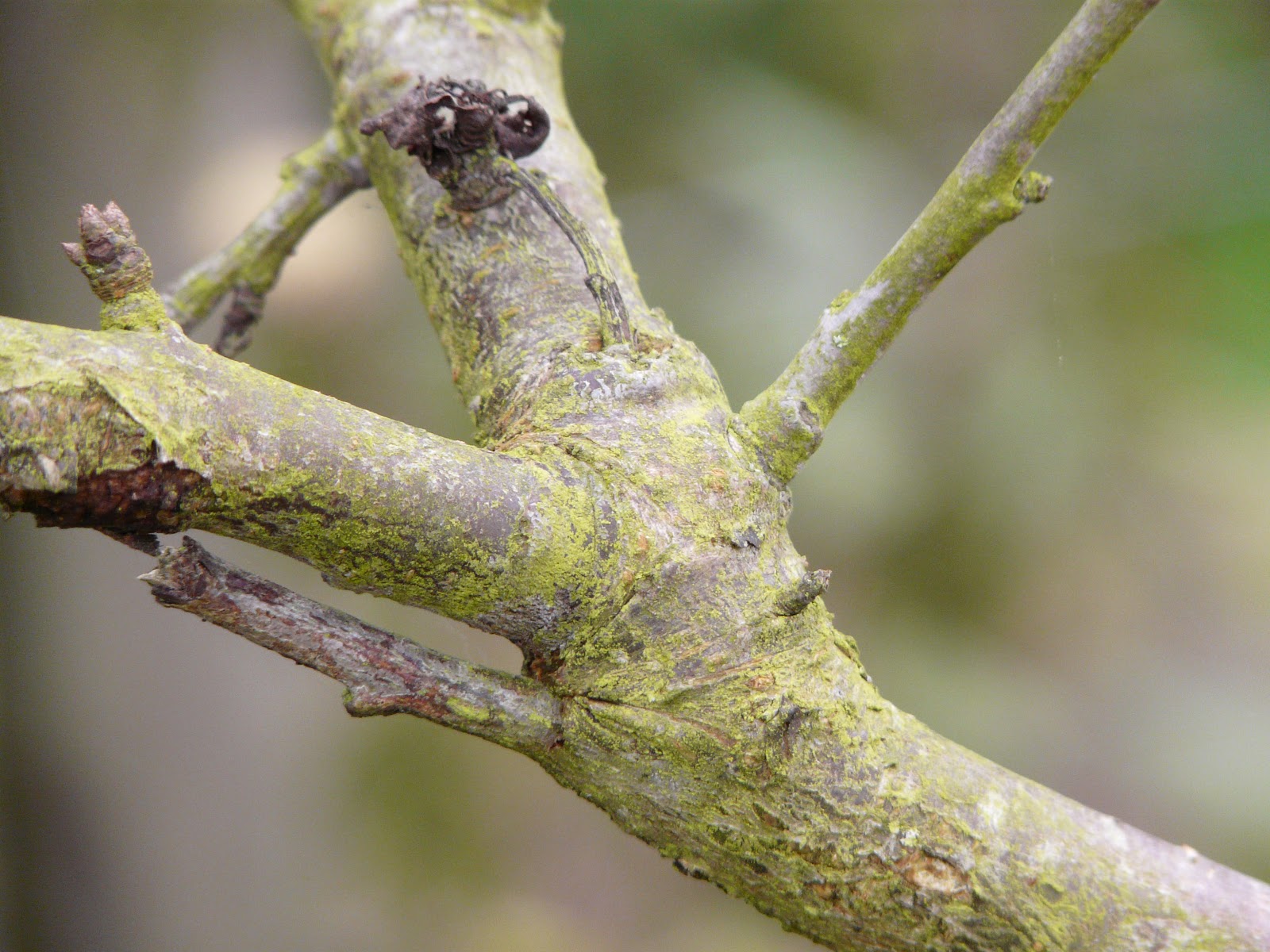
The trees I have noted have a considerable amount of moss growing on them and the ground continues to be very dam and moist. The grass is dying back and it seems in some places that the ground is actually 2 inches further down that you think. This is because the grass is so long and has fallen down giving the impression that the ground slightly higher than it is.


I have given additional food to the bees and each hive got 6 kilos of sugar fondant, winter is kicking in. I may have to order more in.

Friday, October 19, 2012

Bee Stings


18th October 2012 lecture given by John P Gower

John is a surgeon who became interested in bees and bee stings after a patient had an extreme allergic reaction to a sting.

People have around 40,000 stings a year. From his experience most are from wasps. Around 20 people have anaphylactic reactions. Anaesthetic drugs kill about 10 people a year, nuts kill about 5 people a year and insect stings from wasps and bees kill about 4 people a year. Roughly 40 bee keepers a year are taken to hospital. 

Why do bee and wasps sting. 
Bees and wasps sting normally to protect nests and colonies. Lots of reasons can trigger or increase the likely hood of stings; this includes things like the weather, the season, the state of a colony, if a hive or nest is queen less, or brood less.

Guard bees are alerted as an animal approaches too closely to a hive or makes nervous or erratic movements. If hives are rocked or vibrated or a direct threat to an individual bee is identified it heightens the chances of a sting.  Strong odours, pheromones, dark colours and carbon dioxide from mammals also increase the chances of a sting. 

Guard bees intent on stinging, rear up with wings spread and mandibles' open.
Alerted bees may leave nest searching for a predator. 

At first bees start buzzing and irritating-annoying the predator. Bees may continue and finally head butt the predator to ward them away. Bee's will also burrow into hair and may pull or bite hair again to annoy and irritate the predator away. The bee or the wasp is going for rapid movement and is searching for the face and the breath and sweat will attract the bees.

Bee attempts to sting
Where clothes are more constricted the bee sting has a better chance of impaling you. Venom that has dried on clothes will attract other bees. It's important to keep the bee suit clean.

The sting is a modified ovipositor. Only the queen and the male bees do not have them. The sting is normally in a retracted state. It is enclosed in the 7th abdominal segment controlled by nerves.

One the sting has been deployed its takes for upto a minute or longer to inject all the venom. The venom is stored in a venom sac grown from day 3 - day 21 in the brood. The older a bee the less venomous they are.
An umbrella action sucks and pushes and pumps the venom. The bee sting pushes in deeper by pumping its muscles.

Venom is a clear liquid which tastes bitter and smells of ripe bananas 88% of it is made up of water. It also contains enzymes and phospholipids, Hyaluronidase and acid phosphates its these that are responsible for the allergic response. 

Venom contains mellitin about 52% of it is mellitin. It encourages the production of cortisol in the body as does Apamin and another core ingredient. The rest is a mixture of Adolapin, Phospholipids and Hyaluronidase and Histamine, which causes the allergic response.

The first sting is the main allergic contributor. It produces a local reaction, 
  • fiery intense pain 
  • immediate redness
  • small pale raised area about 1 cm in diameter

Second and sub sequential stings.
  • Central sting subsides but surrounding areas swell and increases slowly over several hours
  • It may be gross where skin is loose. Primarily the face.
  • Such swelling is not dangerous unless it affects the airway
  • Itching is caused by histamine released, from the venom.
  • There may be blistering and this can get infected if not protected 

Treatment of normal reactions
  • Relive pain by cooling - via ice pack
  • Give simple analgesic aspirin paracetamol
  • If swelling after stings becomes a problem take antihistamine and hour before tending the bees eg Priton.

Bee keepers normally become desensitised to bee stings over time some even after having kept bee for a long period may get an allergic reaction. 

John suggested a book by Harry Riches - Medical aspects of Beekeeping for further reading.